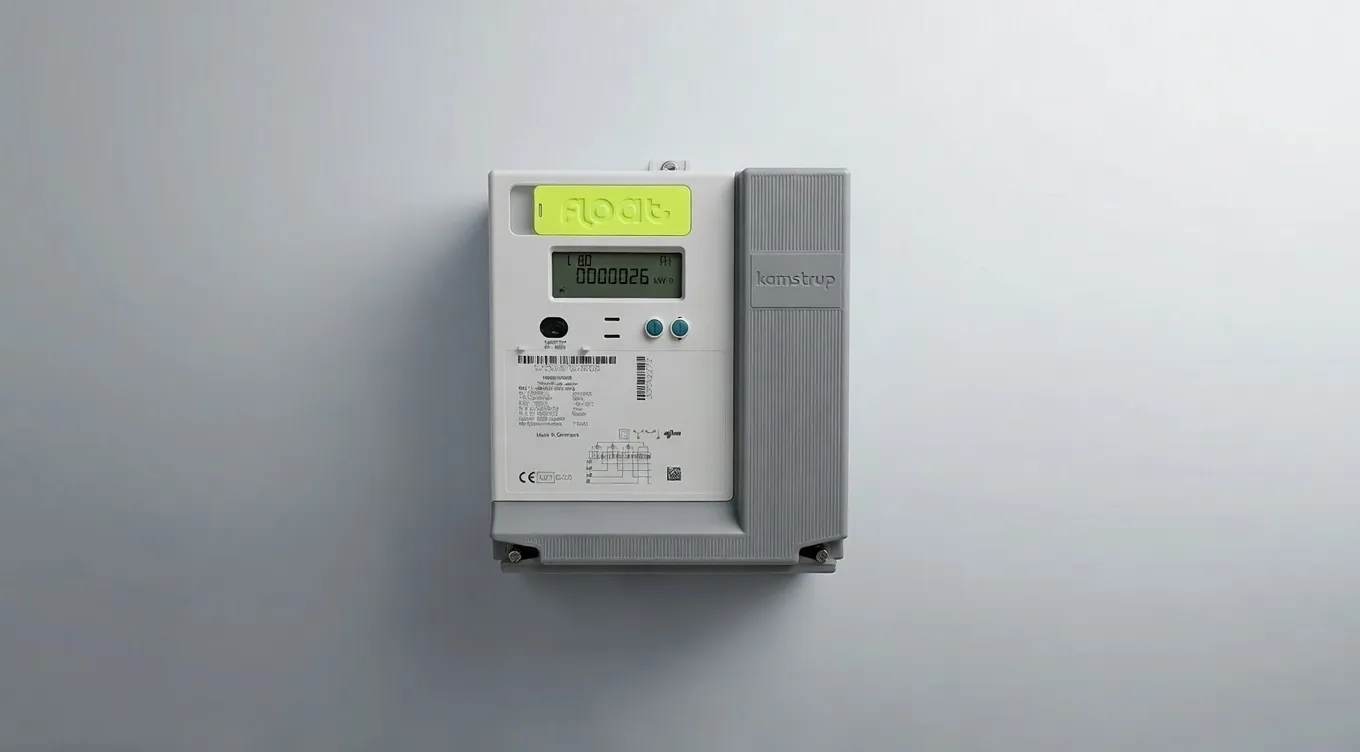
When we started Float, the easiest path would have been to build a software layer on top of existing smart meter APIs. The data is there — sort of. It updates once an hour, sometimes once a day, and it's limited to total household consumption.
That wasn't good enough.
The resolution problem
To build real-time energy intelligence — live cost tracking, AI-powered insights, appliance detection — you need data at a resolution that simply doesn't exist through standard utility APIs. You need second-by-second readings. You need voltage data across all three phases. You need a direct, low-latency connection to the meter.
So we built our own module.
What the Float module does
The Float module is a small, plug-and-play device that connects directly to the HAN port on your smart meter. It reads raw metering data at high frequency and streams it to our cloud platform over Wi-Fi.
No electrician required. No modifications to your meter. Just plug it in and connect.
The hardware decisions
Building hardware is hard. We had to make dozens of trade-offs:
- Connectivity: Wi-Fi for reliability and bandwidth, with plans for LTE-M fallback
- Power: The module draws power directly from the meter's HAN port — no external power supply needed
- Security: TLS encryption, certificate-based authentication, and secure boot
- Updates: Over-the-air firmware updates so every module in the field stays current
Was it worth it?
Absolutely. The Float module gives us a data advantage that no software-only approach can match. It's the foundation for everything we're building — from real-time monitoring to appliance detection to proactive AI agents.
If you want to see what's possible when you own the full stack, sign up for Float.